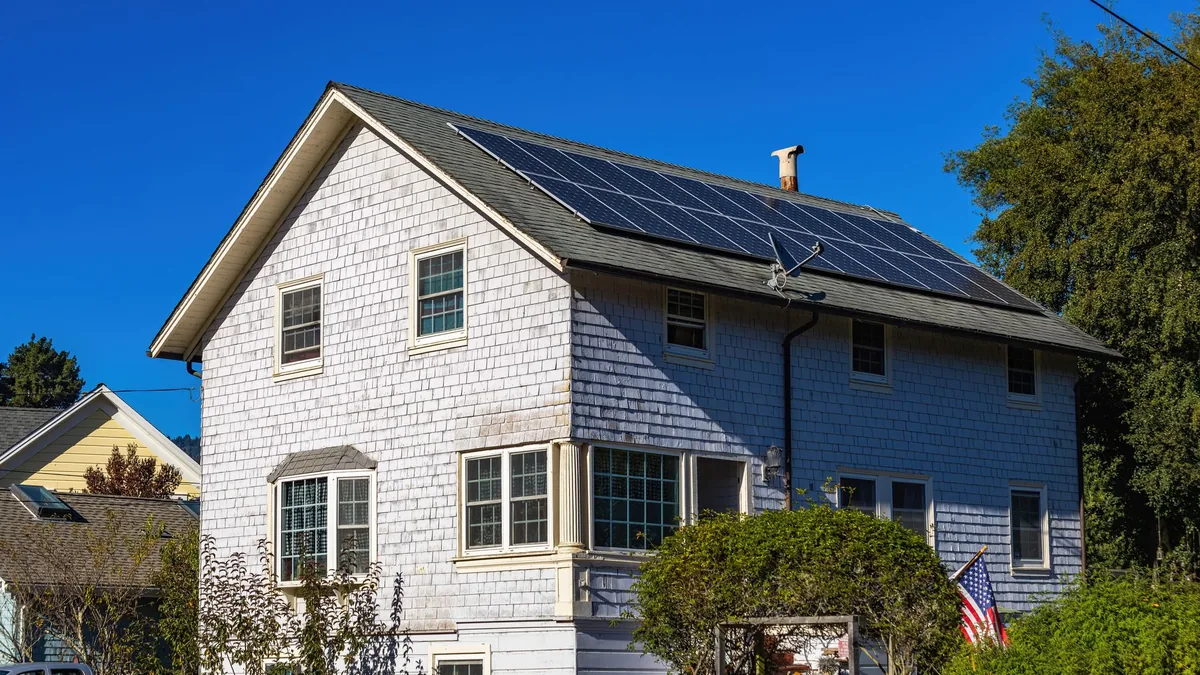
Solar Battery Storage in Winston-Salem, NC
Solar battery storage lets your Winston-Salem home keep the power its panels make during the day and use it in the evening or during an outage. We add batteries to new solar systems and to existing ones across Winston-Salem, Clemmons, Lewisville, and Bermuda Run.
- Batteries sized to what you want backed up
- Electrical permits filed with the City of Winston-Salem Inspections Division
- Ask us about Duke Energy battery programs
Get a Free Solar Quote
Tell us what you need — we’ll get back to you fast.
We'll be in touch shortly.
Please call us at (336) 360-3767.
Why Home Batteries Matter More Now
A few years ago, most homes with solar used the grid as a free battery: send extra power out during the day, pull it back at night, and let the meter even things out. That changed. Duke Energy's revised North Carolina residential net-metering riders took effect October 1, 2023, and under the current rules new Duke Energy customers take Rider RSC, which credits monthly net exports at the utility's avoided-cost rate and requires a time-of-use rate with critical peak pricing.
Put simply, the power you export is credited at a lower value than the power you buy back, and the time of day you buy it matters. A battery shifts your own solar power into the evening hours, when household use climbs and time-of-use prices are highest. That is the main reason homeowners ask about a battery today, along with keeping the lights and the refrigerator on when a storm knocks out power.
The Piedmont's hot, humid summers and cool winters mean summer evenings with the air conditioning still running after the sun drops. Those are exactly the hours a battery is built for.
What a Battery Can Do for You
Evening use
Run the house on stored solar power after sunset instead of buying peak-priced power.
Outage backup
Keep essential circuits running when the grid goes down.
Fewer exports
Keep more of your own production rather than exporting it at a lower credit.
Add-on ready
Paired with a new system, or added to panels you already own.
The Process
Adding a Battery, Step by Step
Usage Review
Your bills, your panels, and what you want to keep running.
Sizing
Battery capacity and backed-up circuits matched to those goals.
Permit
Electrical permit filed with the City of Winston-Salem Inspections Division.
Install and Inspect
Battery, gateway, and wiring installed, inspected, and set up in the app.
Sizing a System Around What You Want Backed Up
There is no single right battery size. The question is what you want it to do. A household that mainly wants to shift solar power into the evening needs a different setup from one that wants the well pump, the furnace fan, and the refrigerator running through a two-day outage. We start with a list of what matters to you and work out the capacity from there.
Combining panels with a battery can happen at the same time as a new install or later. If you are planning solar panel installation now, designing both together keeps the wiring simple. If your panels are already up, we check the inverter type and the main panel to see how a battery connects to what you have.
Batteries are electrical equipment, and the rules here are clear: North Carolina treats residential solar PV as electrical work, and installations of any value require an electrical contractor licence, and an electrical permit is required whenever wiring or equipment changes. Every battery we install is permitted through the City of Winston-Salem Inspections Division at the Bryce A. Stuart Municipal Building, 100 E First Street.
Cost, Programs, and Honest Numbers
Battery prices depend on capacity, brand, and how much rewiring your home needs, so we quote each house after a visit. Ask us about Duke Energy battery programs when we talk; we will tell you what we can confirm for your account rather than quoting a program amount we have not verified.
Keep the tax picture straight, too: the federal 30% Residential Clean Energy Credit does not apply to expenditures made after December 31, 2025, and a system counts when installation is completed. We build every proposal on the rules that apply now. If you already own panels on the old rider, legacy Rider NM customers move to the Net Metering Bridge after December 31, 2026, which may be a good moment to look at storage.
Batteries also need a little care over time. Our solar panel repair service covers battery and inverter checks along with the panels themselves.
Common Questions
Frequently Asked Questions
How does a home solar battery work?
Your panels charge the battery during the day, and the house draws from it in the evening or during an outage. With net exports are credited at the utility's avoided-cost rate under the current rider, using your own stored power can be worth more than exporting it. The battery is permitted through the City of Winston-Salem Inspections Division.
How much battery capacity do I need?
It depends on what you want backed up and for how long. We list your must-run circuits, look at your bills, and size from there, never from a stock package. Since both riders carry a monthly minimum bill, we also show you where the battery helps most and where it does not.
Is a solar battery worth it?
Often more than before. Duke Energy's revised North Carolina residential net-metering riders took effect October 1, 2023, and exports are now credited at a lower value. A battery lets you use that power at home instead. Homes near Wake Forest University or out in Lewisville both see the same rules, but results depend on usage, so we never promise savings.
How much does a home battery cost?
Price depends on capacity, brand, and wiring. We quote after a visit. Ask us about Duke Energy battery programs, and remember the federal 30% Residential Clean Energy Credit does not apply to expenditures made after December 31, 2025.
Talk Through a Battery for Your Home
Curious what a battery would do for your house? Get a free solar quote or return to the home page.